L4-L5 and L5-S1 Slip Disc: How Most Patients Recover Without Surgery
An MRI report showing an L4-L5 or L5-S1 disc bulge sounds alarming, but most patients recover with structured physiotherapy rather than spine surgery.
By Dr. Anjali Gupta (PT) · · Updated
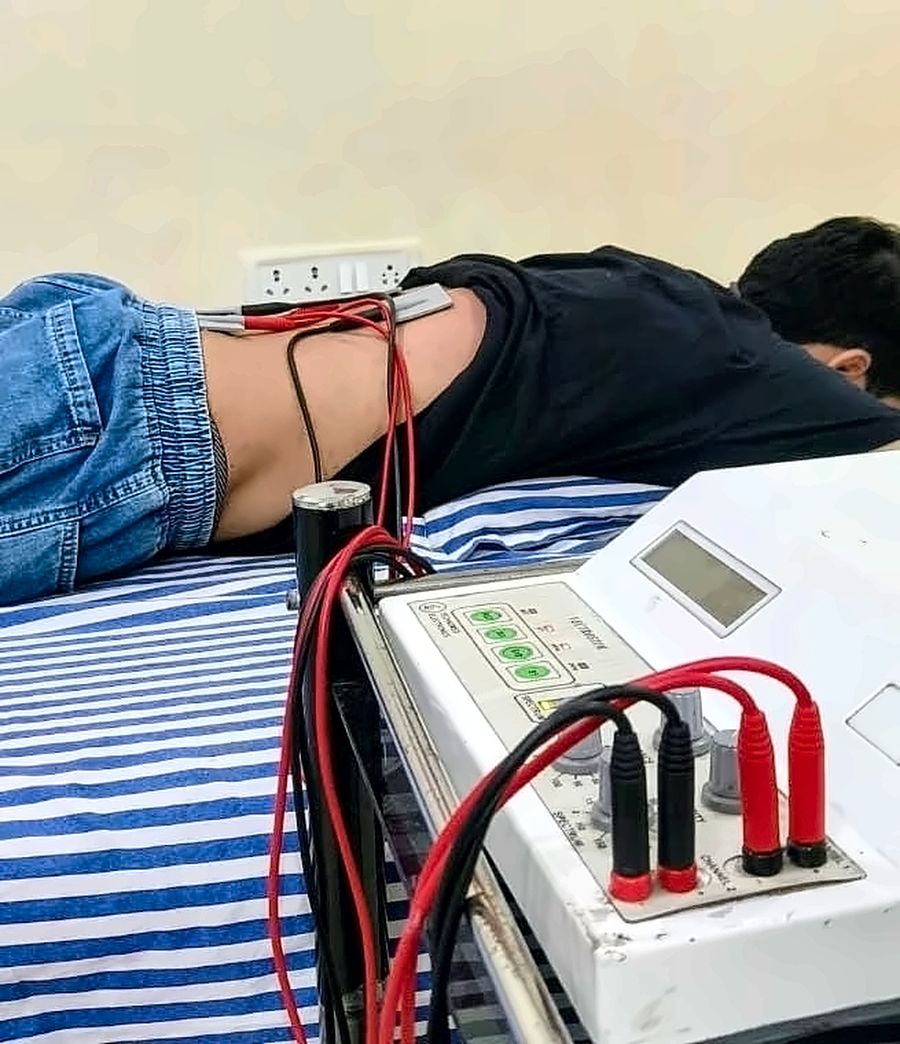
Seeing words like "L4-L5 diffuse disc bulge" or "L5-S1 disc protrusion indenting thecal sac" on an MRI report scares almost everyone. First, a reassuring clinical fact: a disc does not actually "slip" out of place like a bar of soap, and the vast majority of L4-L5 and L5-S1 disc bulges improve with conservative care and physiotherapy, without needing an operation.
Same-day emergency signs: go to a doctor or hospital urgently if back or leg pain comes with difficulty passing or holding urine or stool, numbness in the saddle/groin area, or a foot that suddenly flops or grows weaker.
Why L4-L5 and L5-S1 are affected most often
The lowest two discs of the lumbar spine (between the 4th and 5th lumbar bones, and between the 5th lumbar bone and the sacrum) carry the heaviest bending and sitting load in the body. When the outer ring of the disc gets strained and bulges, nearby inflammation or pressure can irritate a nerve root, sending pain, tingling or heaviness down the buttock, calf or foot (sciatica).
What MRI reports do not tell you
Many adults with zero back pain also show mild disc bulges on MRI scans. That is why a good physiotherapist never treats the scan paper alone: we test how your pain behaves when you stand, walk, bend or lie down, check your leg reflexes and muscle power, and match your MRI findings to your real symptoms.

How physiotherapy guides recovery phase by phase
| Phase | Main goal | What treatment includes |
|---|---|---|
| Phase 1 (Weeks 1 to 2) | Calm the irritated nerve and muscle spasm | Comfortable unloading positions, IFT/TENS pain relief, gentle directional movements |
| Phase 2 (Weeks 2 to 5) | Restore spine and hip mobility safely | Gentle manual therapy, nerve gliding, walking progression and safe home sciatica moves |
| Phase 3 (Weeks 4 to 8+) | Build lasting spinal support | Core, glute and hip endurance training plus safe lifting and sitting habits |
Everyday habits while a disc bulge settles
- Keep walking in short, comfortable spells instead of staying flat in bed all week.
- Break up sitting every 25 to 30 minutes, especially during office work or car/bike travel.
- Turn as one unit in bed: bend your knees and roll your shoulders and hips together rather than twisting the waist.
- Avoid heavy forward-bent lifting (buckets of water, gas cylinders, suitcases) and forceful toe-touching stretches.
Get your spine and MRI assessed in Patna
At MuvAgain Physiotherapy and Rehab Centre on Ashiyana Digha Road, Dr. Anjali Gupta (PT) reviews your MRI and tests your movement one-to-one in a private room. Read more about our sciatica and slip disc treatment in Patna, check upfront session charges or book an appointment.
Bring your MRI report and films to your first visit so we can explain the findings in plain language.